
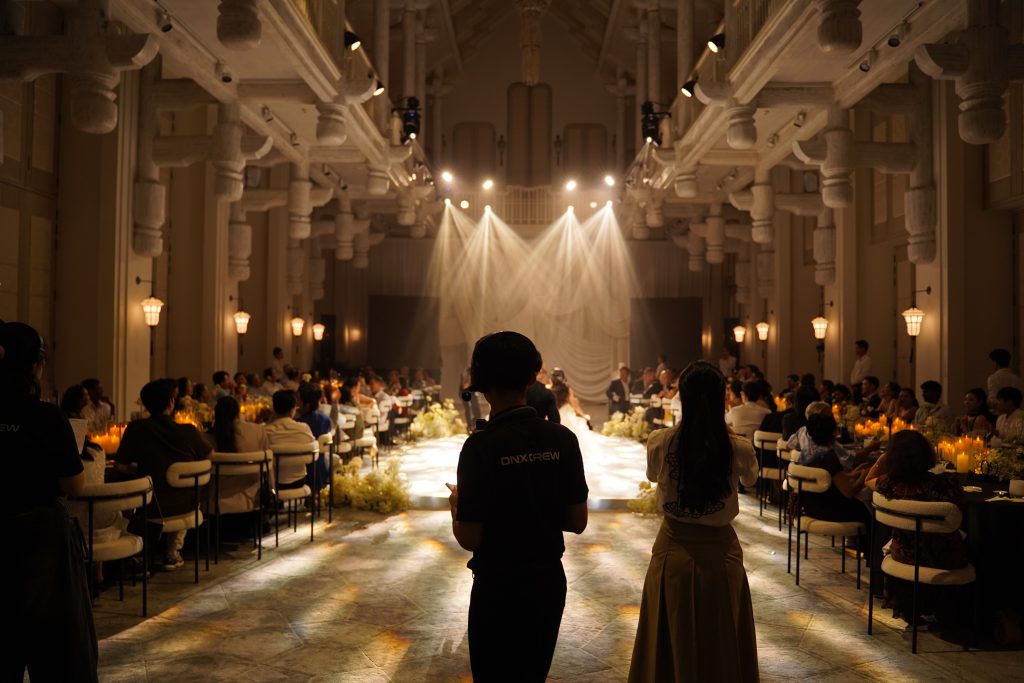
Almost every couple who writes to us has already found a planner they like somewhere else — in Bali, in Sydney, in their home city. The question they are really asking is whether hiring a Danang-Based Wedding Planner matters when so much of planning happens over email anyway. It does, and not for the reasons most articles give.
A destination wedding in Vietnam is not one event. It is a chain of roughly forty small commitments — a venue hold, a rental order, a permit, a flower quote, a transport schedule, a rehearsal slot — each made with a different person, most of whom do business in Vietnamese, by phone, and on relationships built over years. The job of a Danang-Based Wedding Planner is to hold that chain together. Where they hold it from turns out to matter a great deal.
This is not an argument that planners from elsewhere are less talented. Many are excellent, and some of the most beautiful weddings in Danang have been designed by people who flew in. It is an argument about a specific kind of risk, and about who absorbs it when something moves.
Vendor relationships are not a directory — they are credit
An out-of-town planner arriving in Danang can find vendors. Anyone can find vendors. What they cannot bring with them is standing: the accumulated history that makes a florist take a 9pm call the night before a wedding, or a rental house release stock they had promised to someone else, or a venue banquet manager agree to a floor plan change on the morning of the event.
In Vietnam, that standing is transactional in the most literal sense. Local vendors extend flexibility to planners who bring them repeat work and pay on time, and they price accordingly. A Danang-Based Wedding Planner working here year-round is a customer those vendors want to keep. A planner passing through once is a single booking, priced as a single booking, with no reason to bend when the schedule slips.
The visible version of this is cost. The invisible version is what happens at 4pm on the wedding day when a delivery has not arrived — whether the response is an apology or a replacement van already on the road.
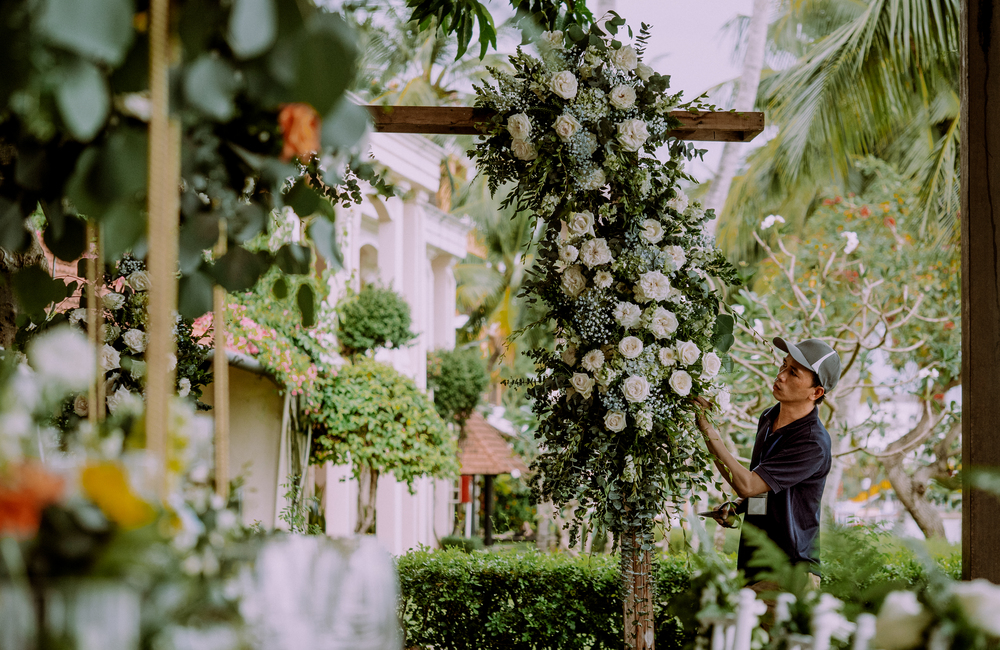
Site visits are a habit, not an expense line
Venues change. A resort renovates the lawn you designed around. A restaurant loses its terrace to a new build next door. A ceremony site that photographed beautifully in March sits in full shade at 4pm in October. None of this appears in a media kit, and none of it survives a single scouting trip taken eight months before the wedding.
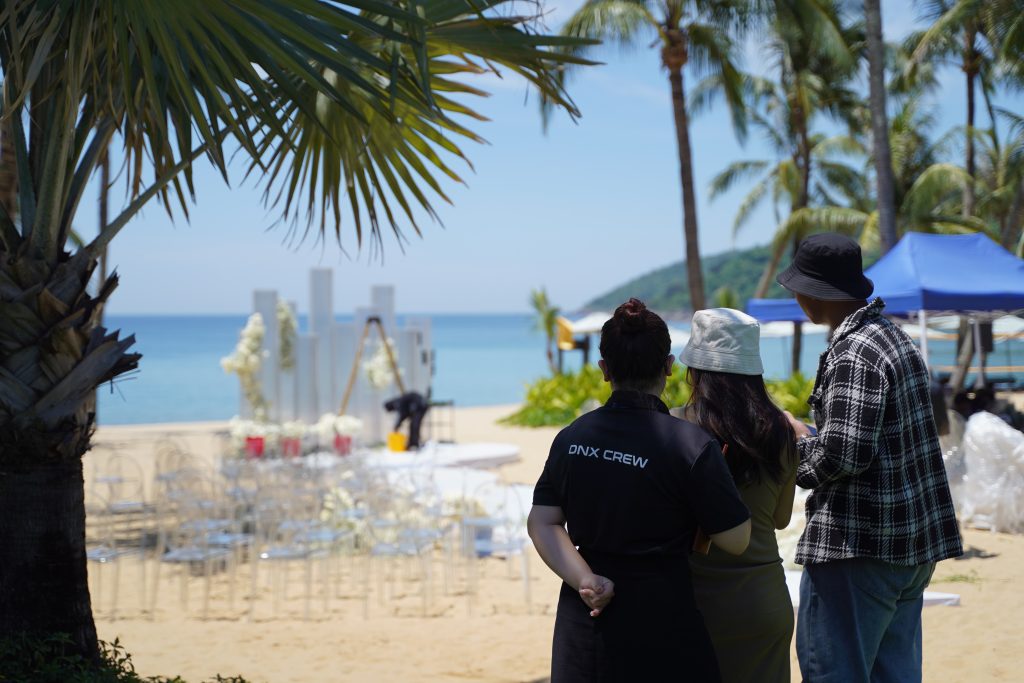
A Danang-Based Wedding Planner can be standing on your ceremony site this week, at your ceremony hour, on a Tuesday, because it costs them an afternoon. That is what makes the difference between a plan built on photographs and a plan built on the place. It is also what makes late-stage problem solving possible: when a venue calls with a change three weeks out, the response is a visit, not a video call.
For couples who cannot travel to Vietnam before the wedding — which is most of them — this becomes the entire basis of trust. Your planner’s eyes are the only ones you have.
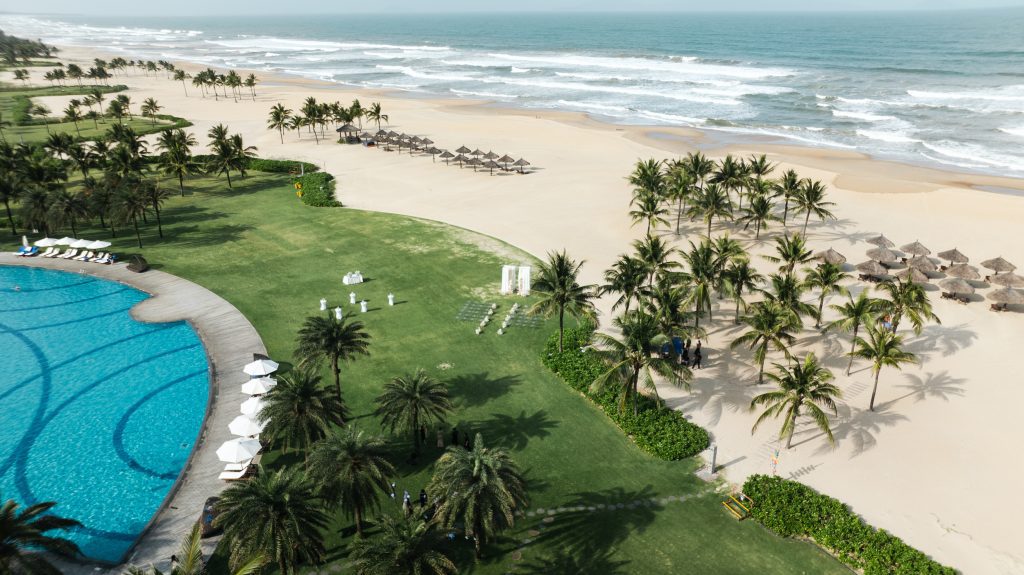
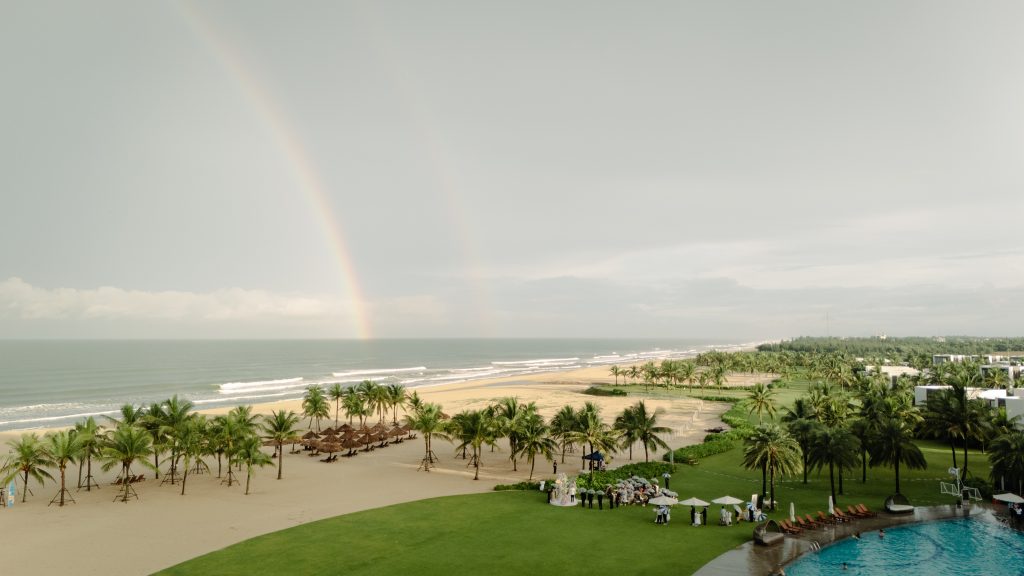
Weather is a Central Vietnam problem, solved locally
Danang and Hoi An sit on a coast with a pronounced wet season running roughly from September through December, with the heaviest rainfall and the highest storm risk concentrated in October and November. The dry months from February to August are the reason the region has become one of Asia’s most reliable wedding destinations. But the shoulder weeks on either side are where judgment matters.
A Danang-Based Wedding Planner reads the season differently from a calendar. They know which resorts have a genuinely usable indoor alternative and which offer a ballroom that will disappoint you. They know that a Hoi An riverside venue behaves differently in a heavy rain event than a beachfront one in Danang, that the Hai Van side and the Hoi An side can have different afternoons, and that a typhoon warning three days out means moving guest transport before it means moving the ceremony.
Weather contingency is not a paragraph in a proposal. It is a set of pre-agreed decisions with venues and vendors — who calls whom, at what hour, at whose cost — and those agreements only hold if someone local made them.
A practical marker: ask any planner you are considering what their rain call looks like — specifically, how many hours before the ceremony the decision is made, who makes it, and what it costs to switch. A planner who works in Central Vietnam every season will answer immediately. It is one of the fastest ways to tell local experience from local research.
Language is where budgets quietly leak
Vendor quotes in Vietnam are frequently negotiated, not published. The same flower order can carry two very different numbers depending on who is asking, in what language, and whether the vendor expects to work with that person again. This is not dishonesty; it is how a relationship-based market prices risk and effort.
A Danang-Based Wedding Planner negotiating in Vietnamese, in person, with vendors who know them, is working from the local number. A planner negotiating in English through an intermediary is working from a different one, and the gap sits inside your budget without ever appearing as a line item.
The same applies to contracts. Deposit terms, cancellation clauses, overtime rates and what exactly “service charge” covers vary widely between venues here, and the version you are shown in English is sometimes a summary rather than the operative agreement. Reading both matters.

Permits, paperwork and the parts nobody advertises
Most international couples marry legally in their home country and hold a symbolic ceremony in Vietnam, which keeps the legal side simple. But the operational side is not. Drone footage over certain areas, amplified music past set hours, fireworks or sparklers, ceremonies on public beaches and access to some heritage sites in Hoi An all involve permissions that are handled locally, often venue by venue, and sometimes with lead times that surprise people.
Couples rarely learn about these from a proposal. They learn about them when something is refused. A Danang-Based Wedding Planner knows which requests are routine, which are genuinely impossible, and which simply need to be asked earlier and by the right person.

Guests, transport and the geography couples underestimate
Danang, Hoi An and Hue form a triangle that looks compact on a map and behaves very differently in practice. Danang International Airport sits inside the city; Hoi An is a drive south along a coastal road that congests at predictable hours; the Hai Van Pass toward Hue closes to certain vehicles in poor weather. A welcome dinner in the Hoi An Ancient Town, where vehicle access is restricted in the evenings, is a logistics exercise, not a booking.
Multiply that by eighty guests arriving on different flights across three days, half of them in Vietnam for the first time, and transport becomes the single most common source of wedding-week stress. It is also the part most easily solved by a Danang-Based Wedding Planner who knows these roads week after week.
Where a planner from elsewhere genuinely fits
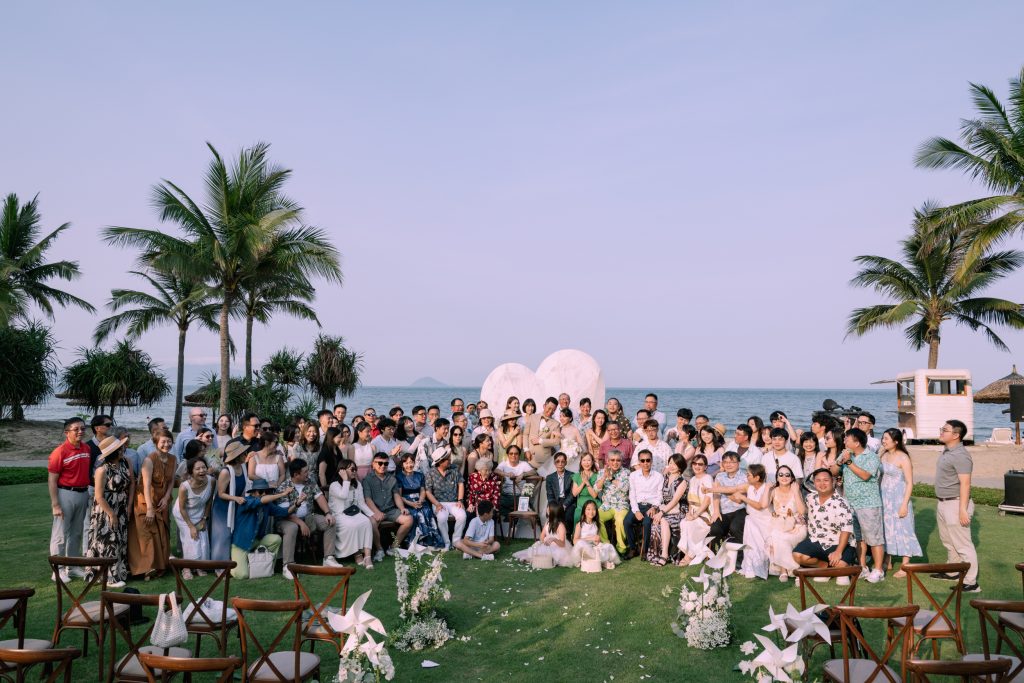
There is a version of this that works well, and it is worth saying plainly. Couples with a long-standing relationship with a designer or planner at home — someone who understands their families, their aesthetic, and how they make decisions — often want that person involved, and they should be.
The arrangement that succeeds is a partnership: the planner you trust holds the vision, the client relationship and the design direction, while Danang-Based Wedding Planner holds the vendors, the contracts, the permits and the ground operation. What rarely succeeds is one person attempting both from six time zones away.
| Where it shows up | Planner based in Danang | Planner flying in |
|---|---|---|
| Vendor pricing | Repeat-client rates, negotiated in Vietnamese | One-off booking rates, often via an intermediary |
| Site verification | Ongoing, at the actual ceremony hour and season | One or two scouting trips, months in advance |
| Weather contingency | Pre-agreed with the venue, with a named decision-maker | Documented in the proposal, negotiated when it happens |
| Wedding-week problems | Solved in person, usually before the couple hears about them | Solved by phone, dependent on vendor goodwill |
| Permits and access | Known lead times, existing channels | Researched case by case |
What to ask before you decide
- How many weddings have you produced in Danang or Hoi An in the past twelve months, and at which venues?
- Which of my shortlisted venues have you personally worked at, and what would you tell me about each that the venue would not?
- Who on your team will be physically present during wedding week, and from when?
- Do you negotiate directly with vendors in Vietnamese, or through a local coordinator? If the latter, who are they and how are they paid?
- Walk me through the last time weather forced a change. What happened, who decided, and what did it cost the couple?
- If a vendor fails three days out, what is your replacement path?
Answers to those six questions will tell you more than any portfolio. A planner who works here will answer them in specifics — venue names, staff names, hours, numbers. A Danang-Based Wedding Planner will answer them in specifics — venue names, staff names, hours and numbers.
What a Danang-based wedding planner actually gives you
The value of a Danang-Based Wedding Planner becomes clearest during the six hours in which the wedding is actually delivered. Everything that determines how those six hours feel — whether the timeline holds, whether the flowers arrive, whether the rain plan is a plan or a scramble — comes down to how many people in this city will pick up the phone for your planner, and how fast they will move when they do.
That local foundation is what a Danang-Based Wedding Planner builds over years, one wedding at a time. It is built in place, over years, one wedding at a time. When you are choosing who to trust with the day, it is worth asking where it was built.
As a Danang-Based Wedding Planner, DNX Wedding has planned weddings in Danang, Hoi An and Hue for international couples since our first season here. If you are weighing your options, tell us about your date and your vision — we will give you an honest read on what is realistic.
Faqs
1. Is a local wedding planner in Danang cheaper than bringing one from abroad?
Usually, on two counts. A Danang-based planner does not charge travel, accommodation or per diem for the planning team, and they access vendor pricing as a repeat local client rather than as a one-off booking. The larger saving is typically the second one, because it applies across every vendor line in the budget rather than to the planning fee alone.
2. Can I keep my own planner and still hire a planner in Danang?
Yes, and it is a common arrangement. The usual split gives the home-country planner the design direction and the couple relationship, while the Danang-based planner handles vendor contracting, permits, logistics and on-the-ground execution. It works when the division of responsibility is written down before either contract is signed.
3. When is the best time of year to get married in Danang or Hoi An?
The dry season from February to August offers the most reliable conditions for outdoor ceremonies in Central Vietnam. Rainfall and storm risk increase from September and peak around October and November. Weddings are held year-round, but dates in the wet season need a genuine indoor alternative agreed with the venue in advance rather than a nominal one.
4. Do we need to be legally married in Vietnam to hold a wedding there?
No. Most international couples complete their legal marriage in their home country and hold a symbolic ceremony in Vietnam, which avoids the local registration process entirely. Legal registration in Vietnam is possible for foreign nationals but involves document legalisation and processing through the provincial Department of Justice, so it is worth deciding early which route you are taking.
5. How far in advance should we book a wedding planner in Danang?
Twelve to eighteen months is comfortable for a peak-season date at a resort venue, largely because the venues themselves book that far out. Shorter timelines are workable, but the choice of venue narrows first, then photography and film, then the strongest vendors in each category.
6. What does a Danang-Based Wedding Planner do that we cannot arrange ourselves?
The parts that require presence and language: negotiating vendor contracts in Vietnamese, verifying sites at the actual ceremony hour and season, securing permissions for drones, music hours and restricted locations, and managing the wedding week in person. Couples can and do book venues and photographers independently; what is difficult from abroad is holding forty separate commitments to a single timeline.


